
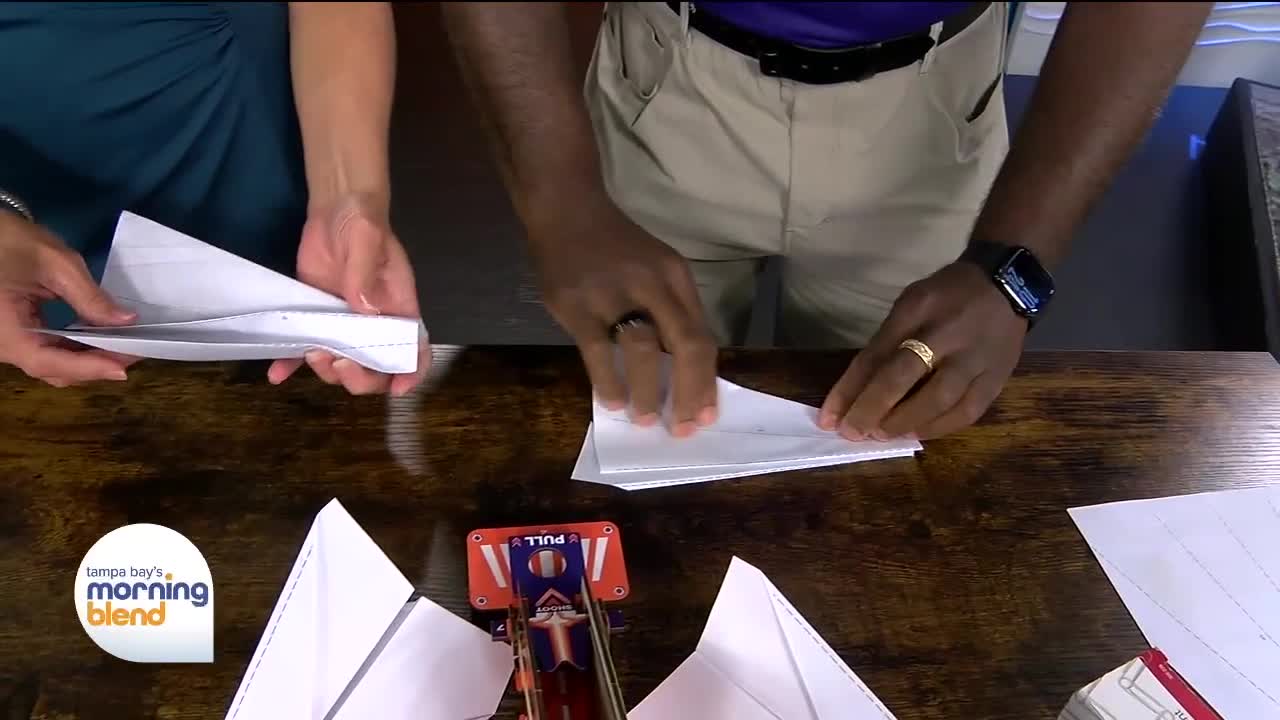
Paper Airplanes A paper airplane demonstrates the four forces of flight through simple physics: thrust is your hand pushing it forward, weight is gravity pulling it down, drag is air resistance slowing it down, and lift is the air pushing up on the wings to keep it gliding. Paper airplane action: Your hand provides the initial launch. Unlike a real plane, a paper airplane has no engine, so thrust stops increasing the moment it leaves your hand.
Weight Gravity constantly pulls the paper toward the floor. Adding a paper clip or tape increases the weight, changing how the plane flies. Drag is the friction of air pushing as the plane moves, air bumps against the front and surfaces. Sharp, neat folds make the nose sleek and lower the drag, helping it go faster.
Lift is the upward force. Air flows over and under the angled wings. This air movement holds the plane up against its weight until the forward speed slows down too much.