
Disclaimer: This Inside South Florida segment is sponsored by World Wildlife Fund. All opinions and views are of the advertiser and does not reflect the same of WSFL-TV.
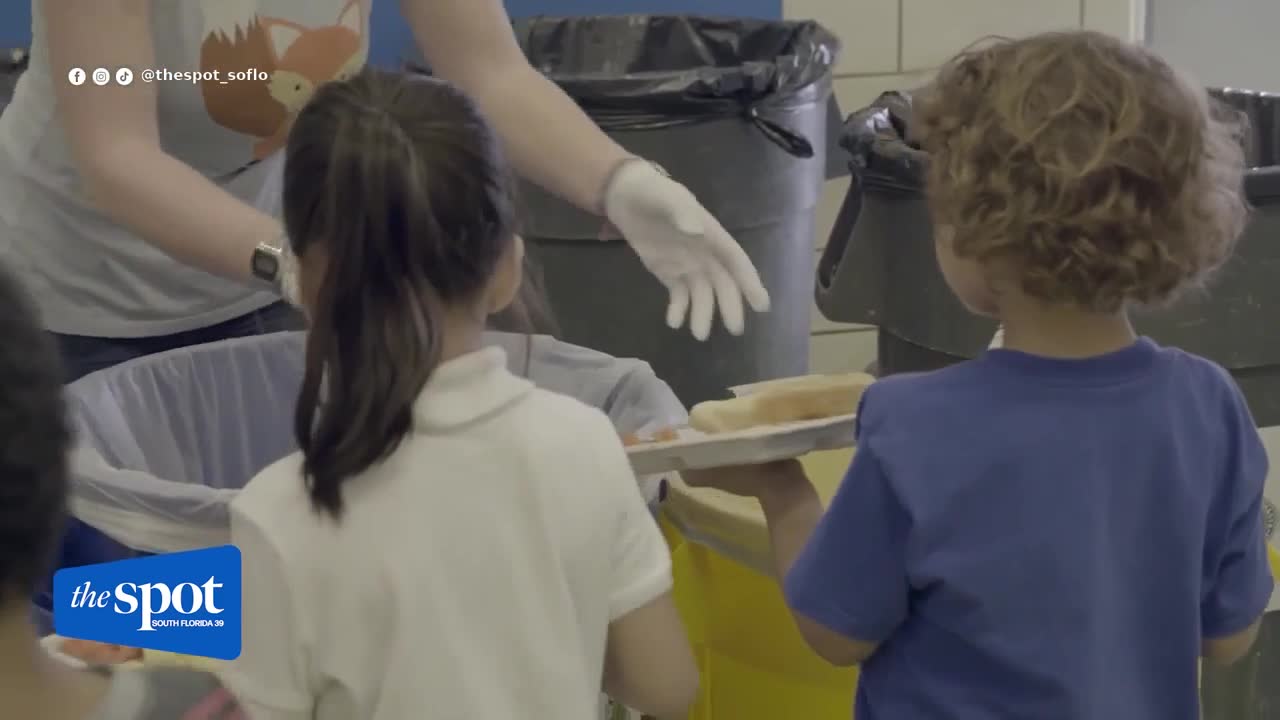
Schools can play an important role in addressing the problem. According to the interview, schools serve more meals each day than all fast-food restaurants combined, making the education system one of the country’s largest food-service programs.
An estimated 530,000 tons of food waste is generated in schools every year.
The impact extends well beyond the cafeteria. When food is thrown away, the land, water, and farm labor used to produce it are also wasted. Food production can also affect wildlife, natural habitats, and other environmental resources.
One proposed solution puts students at the center of the effort.
Students can conduct cafeteria waste audits to investigate how much food is being discarded and identify ways to reduce it. The hands-on activity incorporates math and science while helping students understand the connection between food and nature.
Making Unopened Food Available to Others
Schools can reduce waste by establishing share tables and share refrigerators.
These programs give students a place to leave unopened food and drinks they do not plan to consume. Instead of throwing away an unopened carton of milk, for example, a student can place it in a designated sharing area where another student may take it.
The interview indicates that food collected in these areas is often consumed by the end of the day or week. In some cases, students may also take the available items home after school.
Finding Another Purpose for Food Scraps
Composting is another key part of the proposed strategy.
Schools and school districts are encouraged to compost unavoidable waste and food scraps rather than sending them to a landfill. Through composting, discarded organic material can serve another purpose instead of simply being buried.
Together, cafeteria audits, food-sharing programs and composting initiatives offer students practical ways to confront a real-world problem. These activities can make conservation engaging while teaching students how everyday food choices affect natural resources.
Free resources are available for educators and PTA leaders at https://www.worldwildlife.org/our-work/food/food-waste/food-waste-warriors/
This story was reported on-air by a journalist and has been converted to this platform with the assistance of AI. Our editorial team verifies all reporting on all platforms for fairness and accuracy.