
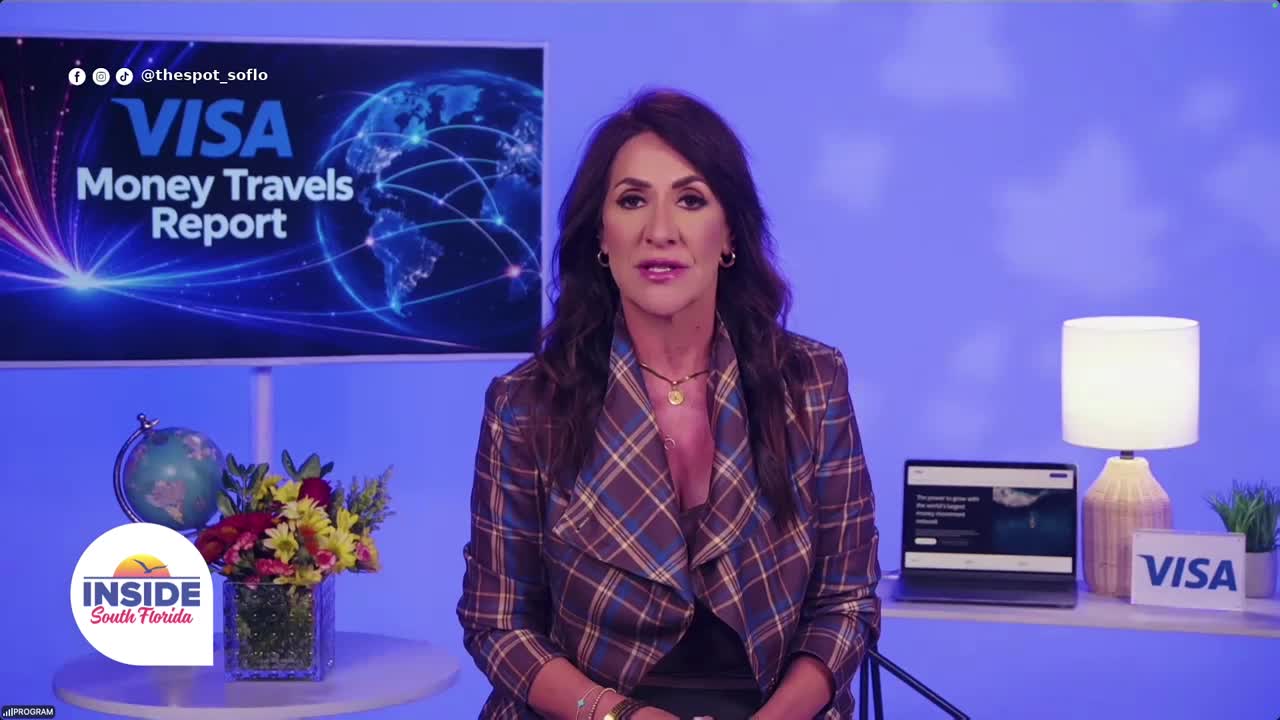
Disclaimer: This Inside South Florida segment is sponsored by Visa. All opinions and views are of the advertiser and does not reflect the same of WSFL-TV.
As the holiday season approaches, many Americans are preparing to send money to loved ones across the globe, and a consumer expert is sharing how to do it safely.
International money transfers can help family and friends celebrate the holidays, cover everyday essentials, meet family obligations, or handle unexpected expenses. A new Visa survey examines why these payments matter and how to make them more secure.
According to consumer expert Claudio Lombana, the reasons behind these transfers are deeply personal.
"Well, the research in the new Visa Money Travels Report 2026 finds that there are deeply personal reasons. Gifting is the number one reason that Americans send money internationally," Lombana said.
These payments are also frequent, often going toward essential needs.
"So, it's a way to stay connected to and help their loved ones who are living overseas. Those expenses go toward things like rent, groceries, even medical expenses, so they are very important. And we also found that the sense of commitment is also being made by the sender, with 1 in 5 U.S. senders saying that they're cutting back on their own personal spending in order to be able to help those loved ones overseas," Lombana said.
With so many people sending money, Lombana says a few simple precautions can help protect consumers.
"There are a few things I would say that the number one is pay attention to any sort of urgent or unexpected request that should send red flags up. Make sure that you can verify the sender of the request or whomever you're sending the money to, directly using a phone number or known contact method, rather than just relying on any sort of a message that may have arrived to you," Lombana said.
"Be cautious about impersonation scams and certainly cautious about AI-generated requests. Never share your passwords, PINs, or verification codes," Lombana said.
Lombana also explained an emerging technology called stablecoins.
"Stablecoins are a type of digital asset designed to maintain a stable value and typically tied to an existing asset, such as the U.S. dollar. So, they're really emerging as another potential way to move money digitally and securely across borders. And of course, with Visa's global security standards and fraud protections. We bridge the gap with 24/7 speed of digital, and the safety and trust of the U.S. dollar in a global banking system," Lombana said.
"So stablecoins emerging is just another way to digitally and securely send those remittances," Lombana said.
This story was reported on-air by a journalist and has been converted to this platform with the assistance of AI. Our editorial team verifies all reporting on all platforms for fairness and accuracy.