
Disclaimer: This Inside South Florida segment is sponsored by American Society of Retina Specialists. All opinions and views are of the advertiser and does not reflect the same of WSFL-TV.
For people living with diabetes, protecting their eyesight can be an important part of managing their overall health. Diabetic eye disease can affect the retina and potentially threaten vision, sometimes before a person notices obvious symptoms.
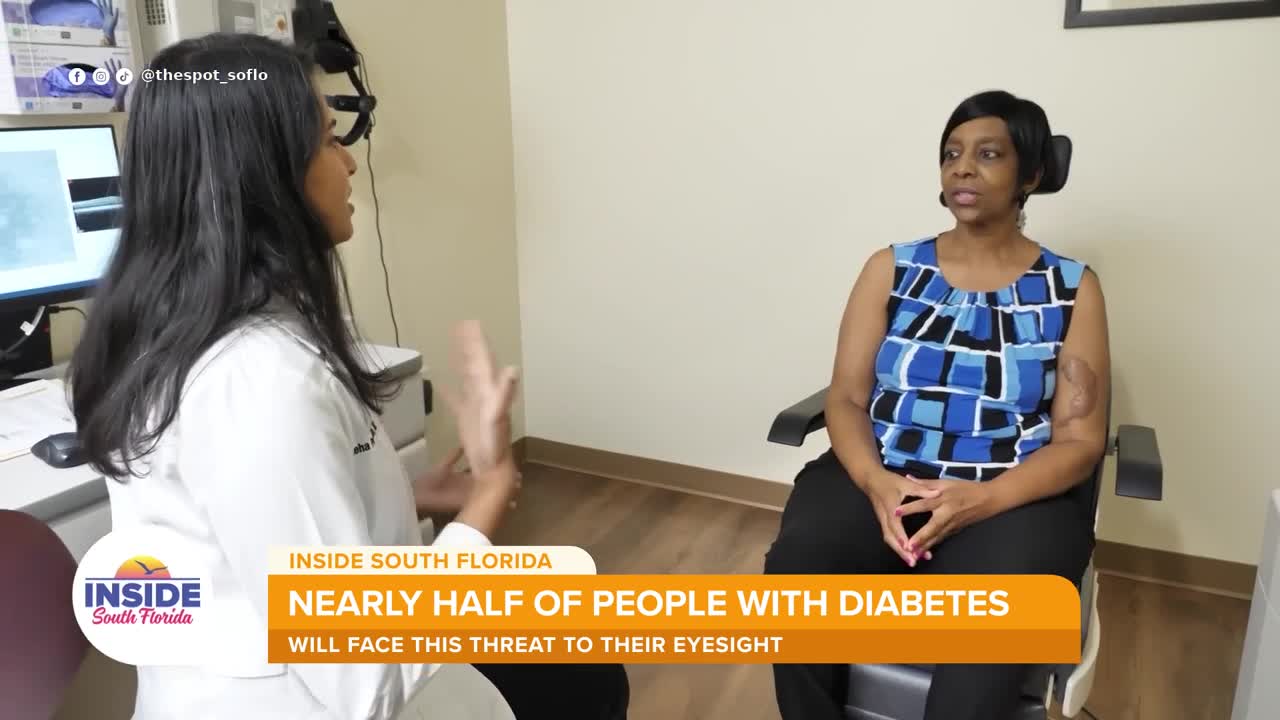
Gaurav K. Shah, MD, FASRS, president of the American Society of Retina Specialists, explains what patients should know about diabetic eye disease, symptoms to watch for, and why regular dilated eye examinations are important even when vision appears normal.
Why Diabetic Eye Disease Can Threaten Vision
The retina is the thin layer of neural tissue lining the back of the eye. According to Dr. Shah, diabetes can lead to the development of abnormal or leaking blood vessels that can interfere with a person's vision.
Because significant eye changes can occur without noticeable symptoms, screening can play an important role in identifying problems early.
Vision Changes to Watch For
Symptoms of diabetic eye disease can include blurred vision, floaters, shadows, and other noticeable changes in vision, according to Dr. Shah.
However, Dr. Shah emphasizes that people with diabetes shouldn't wait for symptoms before having their eyes checked. He recommends a dilated eye examination at least annually, including for patients who aren't experiencing symptoms.
A retina specialist can diagnose and treat complications associated with diabetic retinopathy.
What Treatments Are Available?
Treatment depends on the condition and its severity.
Dr. Shah says options for diabetic retinopathy and diabetic macular edema may include laser treatment, injections of medication into the eye, and vitrectomy surgery.
Vitrectomy may be needed in some cases to remove blood and scar tissue from the eye. Dr. Shah stresses that early diagnosis can help patients achieve better visual outcomes.
When Is a Vision Change an Emergency?
Some sudden changes in eyesight should be treated with urgency.
Dr. Shah says waking up unable to see a hand in front of your face or experiencing a large shadow across your vision could represent an urgent or emergency situation that requires evaluation.
A dilated examination by a retina specialist can help determine what is causing the vision change and identify an appropriate course of treatment.
For more information about diabetic eye disease or finding a retina specialist, Dr. Shah recommends visiting the American Society of Retina Specialists website, ASRS.org.
This story was reported on-air by a journalist and has been converted to this platform with the assistance of AI. Our editorial team verifies all reporting on all platforms for fairness and accuracy.