
Disclaimer: This Inside South Florida segment is sponsored by Premiere TV. All opinions and views are of the advertiser and does not reflect the same of WSFL-TV.
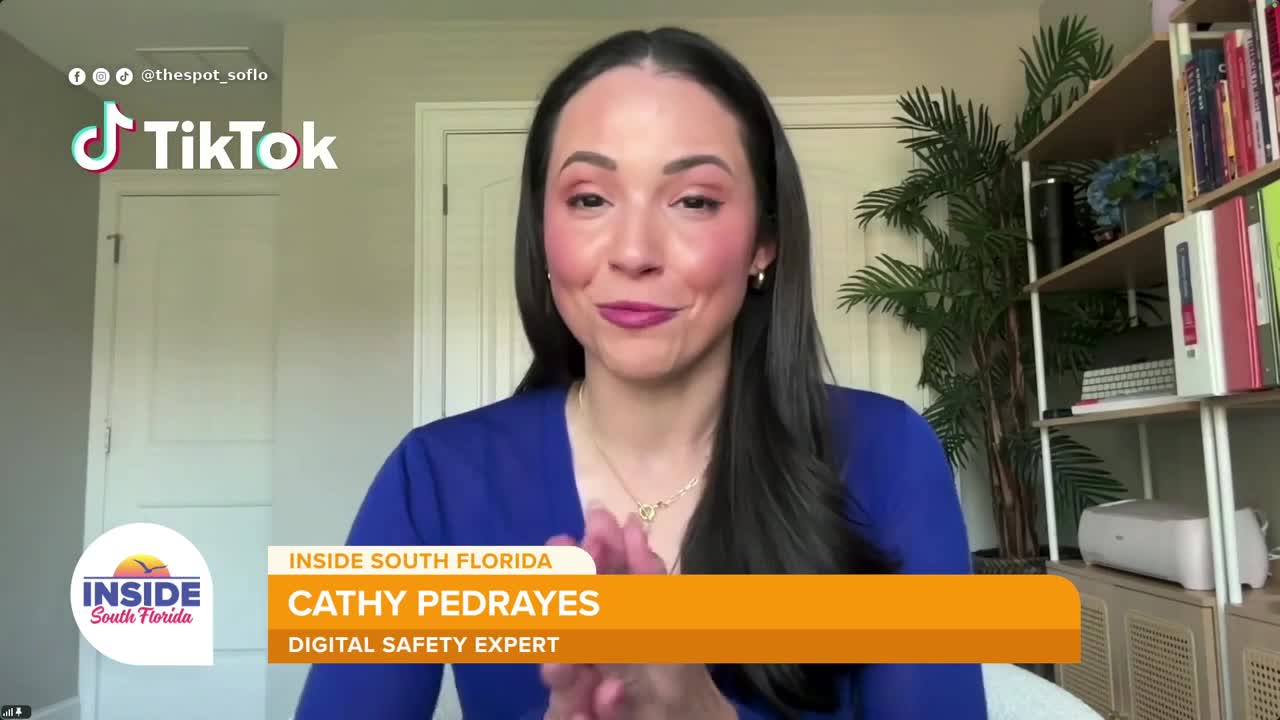
From passwords and social media accounts to texts and direct messages, staying safe online can feel complicated. But digital safety expert Cathy Pedrayes says some simple steps can provide additional protection.
In recognition of Cybersecurity Awareness Month, Pedrayes shared advice for improving account security, recognizing potential scams, and helping families navigate the digital world more safely.
Add Another Layer of Protection to Your Accounts
One of Pedrayes' first recommendations is enabling two-step verification on online accounts. The feature may also be called multi-factor authentication, depending on the platform.
Pedrayes describes the feature as essentially adding a second lock to an account. A password serves as the first layer, while two-step verification provides an additional code as another layer of defense.
That extra protection can be particularly important if a password has been compromised, including through a data breach.
Rethink Your Password Strategy
Strong passwords are another important part of protecting online accounts.
Pedrayes recommends using what she calls "power phrases," which are long, unusual sentences that are memorable to the account holder but difficult for someone else to guess.
She also recommends avoiding password or passphrase reuse across different accounts. Password managers can help users manage different credentials without relying on the same password repeatedly.
Be Suspicious When Something Finds You
Online scams continue to become more convincing, and Pedrayes says familiar advice still applies: if something seems too good to be true, it probably is.
But scams may appear in places that seem familiar and trustworthy.
For example, a suspicious message could appear to come from a friend's group chat if another person's account has been compromised. Gaining access to someone's account can give scammers another avenue for attempting to target that person's friends and family.
Pedrayes suggests remembering another simple rule: "If it finds you, be suspicious." That includes content encountered while scrolling as well as unsolicited direct messages, emails, and calls.
Help Protect Others Online
Online safety can also involve looking out for other people.
Pedrayes recommends reporting scams and content that violates a platform's terms and conditions, which can help prevent problematic content from being shared with others.
For families, she also highlights TikTok's Family Pairing tool. According to the interview, the feature allows parents to link their account with a teen's account and help guide the teen's online experience.
As Cybersecurity Awareness Month continues, Pedrayes' advice shows that improving digital safety doesn't necessarily require complicated changes. Adding two-step verification, strengthening password habits, and approaching unsolicited online content cautiously can all be part of building safer online habits.
This story was reported on-air by a journalist and has been converted to this platform with the assistance of AI. Our editorial team verifies all reporting on all platforms for fairness and accuracy.