
Disclaimer: This Inside South Florida segment is sponsored Allstate. All opinions and views are of the advertiser and does not reflect the same of WSFL-TV.
New Allstate research shows too many Americans are still not prepared for severe weather. More than half worry about it hitting their household, yet 1 in 4 have taken no steps to get ready.
Andrea Bessling, Allstate's claims field director of the National Catastrophe Team, says the data reveals a troubling gap between awareness and action.
"The research tells us that concern is high, but action is low. 53% are worried about what should happen if a natural disaster impacts their home in their community. Yet 26% have not taken steps to prepare, although 49% have already lived through a natural disaster firsthand," Bessling said.
Bessling says the reason so many people delay preparing comes down to human nature.
"It's like that doctor's visit that we put off. We're busy. We worry about cost. There's some uncertainty about when this may occur, and people feel overwhelmed," Bessling said.
But Bessling says preparedness does not have to be complicated or expensive, and offers five steps families should take now to protect their homes and belongings.
The first step is to create a plan. Bessling says families need to know what they would do if they need to evacuate, where they would go, and how they would communicate.
"Have a communication evacuation plan. Have your family be on the same page," Bessling said.
The second step is to build an emergency kit. Bessling says the kit should include a first aid kit and everyday essentials needed for at least a couple of days, including prescription medications, batteries, flashlights, nonperishable food, and water.
The third step is to take a home inventory. Bessling recommends using a phone to record video of your property and storing it in the cloud.
"It's going to make the claims process much simpler if you do have to file a claim," Bessling said.
The fourth step is to assess your property for hazards and keep supplies on hand to board up windows and doors if needed.
The fifth step is to understand your insurance coverage.
"Contact your agents before you need it and make sure you understand risk, deductibles, all the things that come with carrying the right insurance before it's in the forecast," Bessling said.
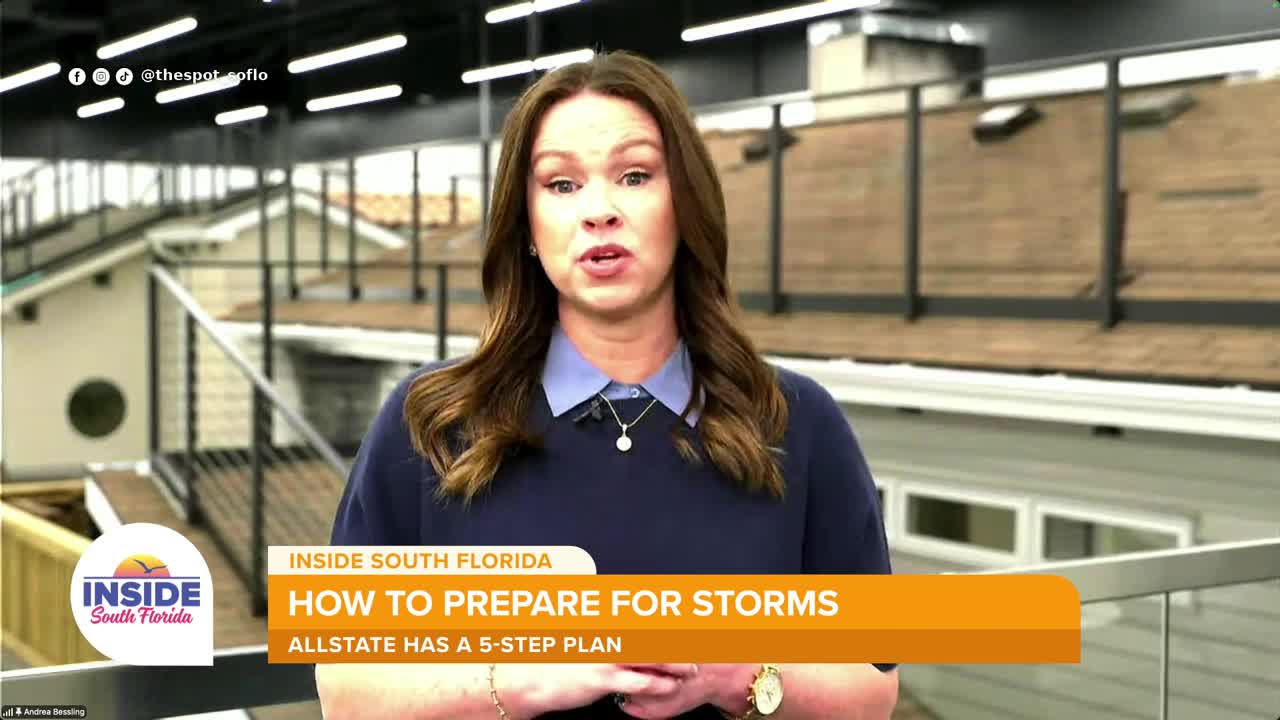
Bessling spoke from Allstate's new Claims University, a 33,000-square-foot training facility designed to prepare claims professionals to support customers when disasters strike. The facility features 2 life-sized homes that mirror damages adjusters and claims professionals will encounter in the field, as well as an auto lab with more than 30 vehicles.
For more information and resources, visit allstate.com.
This story was reported on-air by a journalist and has been converted to this platform with the assistance of AI. Our editorial team verifies all reporting on all platforms for fairness and accuracy.