
Disclaimer: This Inside South Florida segment is sponsored by Savi Security. All opinions and views are of the advertiser and does not reflect the same of WSFL-TV.
The AI boom has delivered real benefits in areas like research and productivity, but the same innovation has also handed an industrial-grade weapon to scammers and cybercriminals.
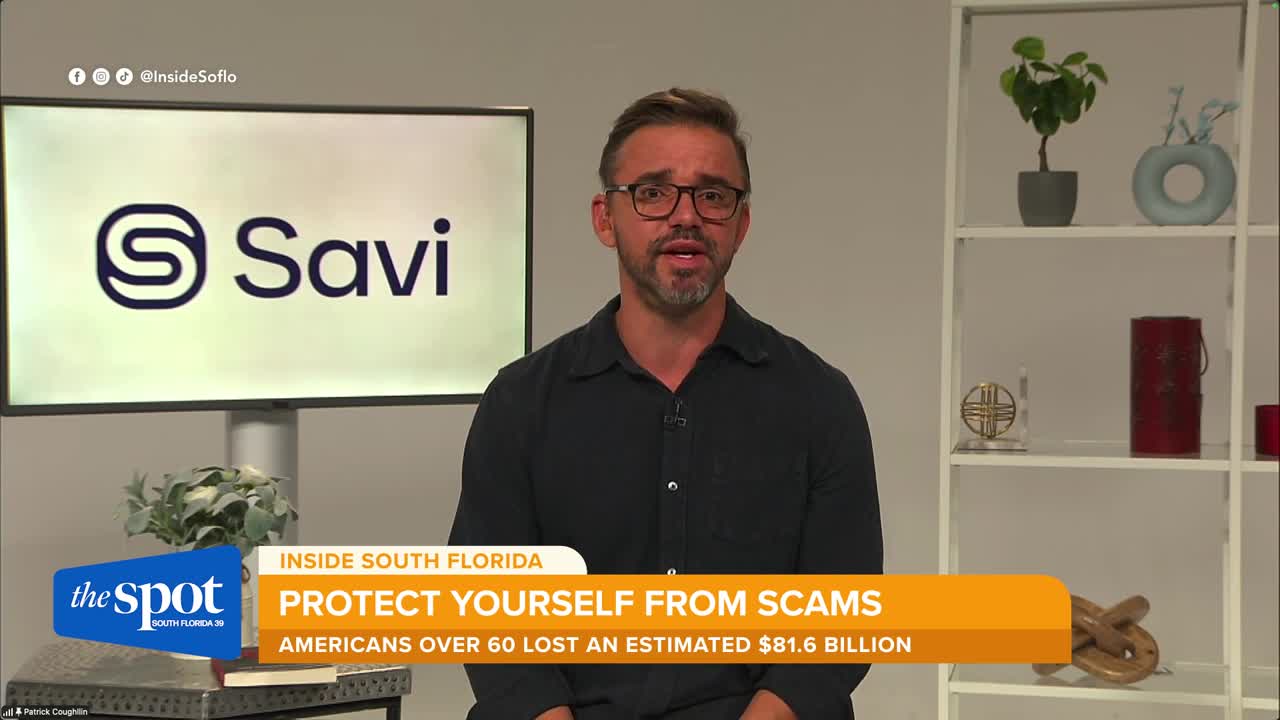
Patrick Coughlin, author of Dark Side of the Boom: How Scammers Hijacked the AI Revolution and a national security and cyber defense expert, says the scale of the problem is staggering.
"The average American now is targeted at least once per day by a scam call, text or email," Coughlin said.
Last year, tens of millions of Americans lost close to $200 billion to digital fraud, making it not only the largest but the fastest-growing crime facing consumers in the country.
Imposter scams make up nearly one-third of all digital fraud. In an imposter scam, a criminal pretends to be someone a target is likely to trust — a government agent, a friend, a loved one, or even a familiar brand.
"AI in the hands of imposter scammers makes these games more personalized, more polished, and more convincing so that even the savviest amongst us are vulnerable," Coughlin said.
While older Americans are often hit with the hardest-hitting scams and lose the most money, largely because they tend to have more savings, the threat is not limited to any one age group. Gen Z is 3 times more likely to fall for a scam today than baby boomers.
Coughlin said removing the stigma around scams is a critical first step toward addressing the problem.
"We have to remove the stigma, the shame and the embarrassment around these scams so that we can really understand the problem and that people can ask for help," Coughlin said.
His company, Savvy Security, offers tools designed to help individuals and families build better scam filters and find easy ways to get a second opinion in moments that matter, including an app called Scam Wise.
For anyone who receives a suspicious text, email, or call, Coughlin's most important piece of advice is straightforward.
"When you get you're in that moment where you see an urgent text or email or scam or call, you got to take a step back, pause and verify the communication through a second channel," Coughlin said.
More information and resources are available at SaviSecurity.com and through the Savvy Security apps available in the App Store.
This story was reported on-air by a journalist and has been converted to this platform with the assistance of AI. Our editorial team verifies all reporting on all platforms for fairness and accuracy.