
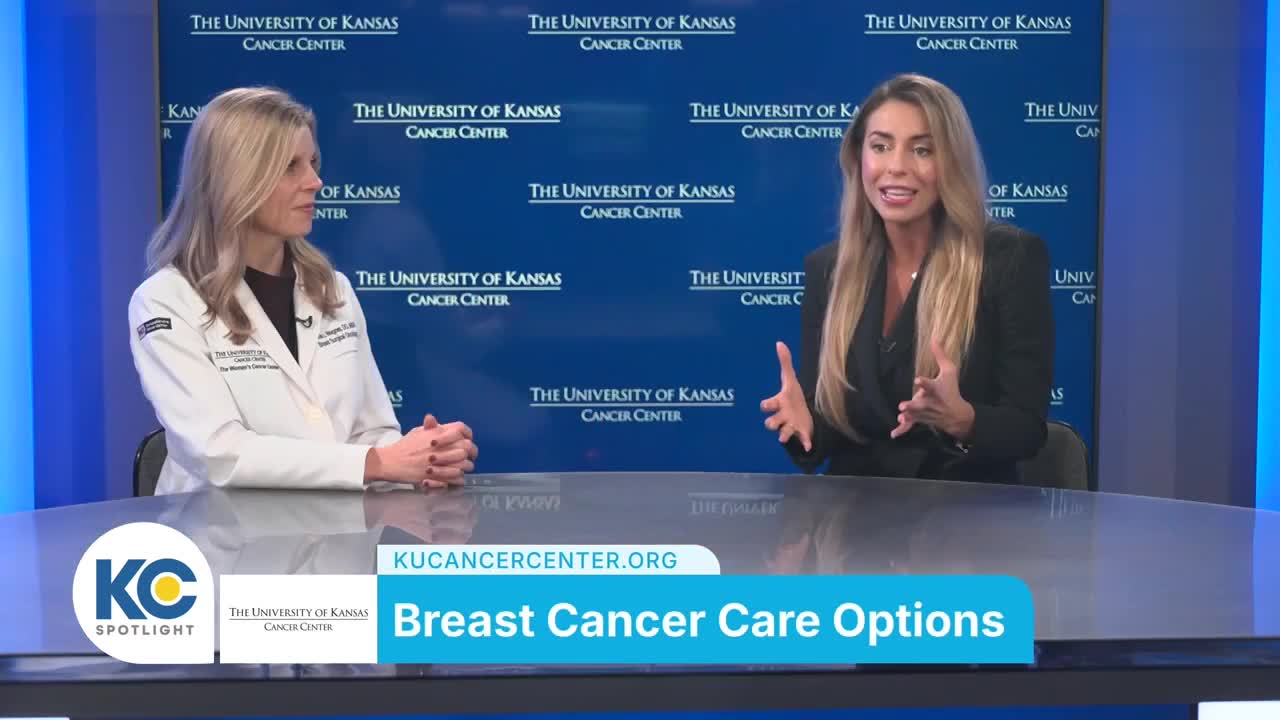
KANSAS CITY, Mo. — As Breast Cancer Awareness Month shines a spotlight on prevention and treatment, experts say significant advances in breast cancer surgery are helping patients achieve better outcomes while improving quality of life.
Breast cancer care has evolved rapidly in recent years, with innovations allowing surgeons to tailor treatment plans to an individual patient's cancer type, anatomy and personal preferences.
"Breast cancer surgery, especially over the last two decades has advanced so much. It's actually quite excited for patients," explained Dr. Jamie Wagner of the University of Kansas Cancer Center. "For patients undergoing a mastectomy, and then what has followed suit, is for patients doing breast-conserving therapy - is maintaining that feeling of wholeness."
An advancement is the continued refinement of minimally invasive procedures and targeted lymph node surgeries. Rather than removing numerous lymph nodes, surgeons can often identify and remove only the nodes most likely to contain cancer. Dr. Wagner explained a targeted approach may help reduce the risk of side effects such as lymphedema, a condition that can cause swelling in the arm.
Technology is also playing a growing role in the operating room. Advanced imaging techniques can help surgeons more precisely locate tumors and assess the extent of disease before and during surgery. These tools allow for more accurate treatment planning and may reduce the need for additional operations.
Improved surgery techniques and breast cancer treatments are helping patients in the recovery process. The University of Kansas Cancer Center and Stryker are at the helm of that success.